


A note before you start. This one comes with a song called Both Words. Put it on while you read if you like, or save it for the end. Either way it belongs to the piece.
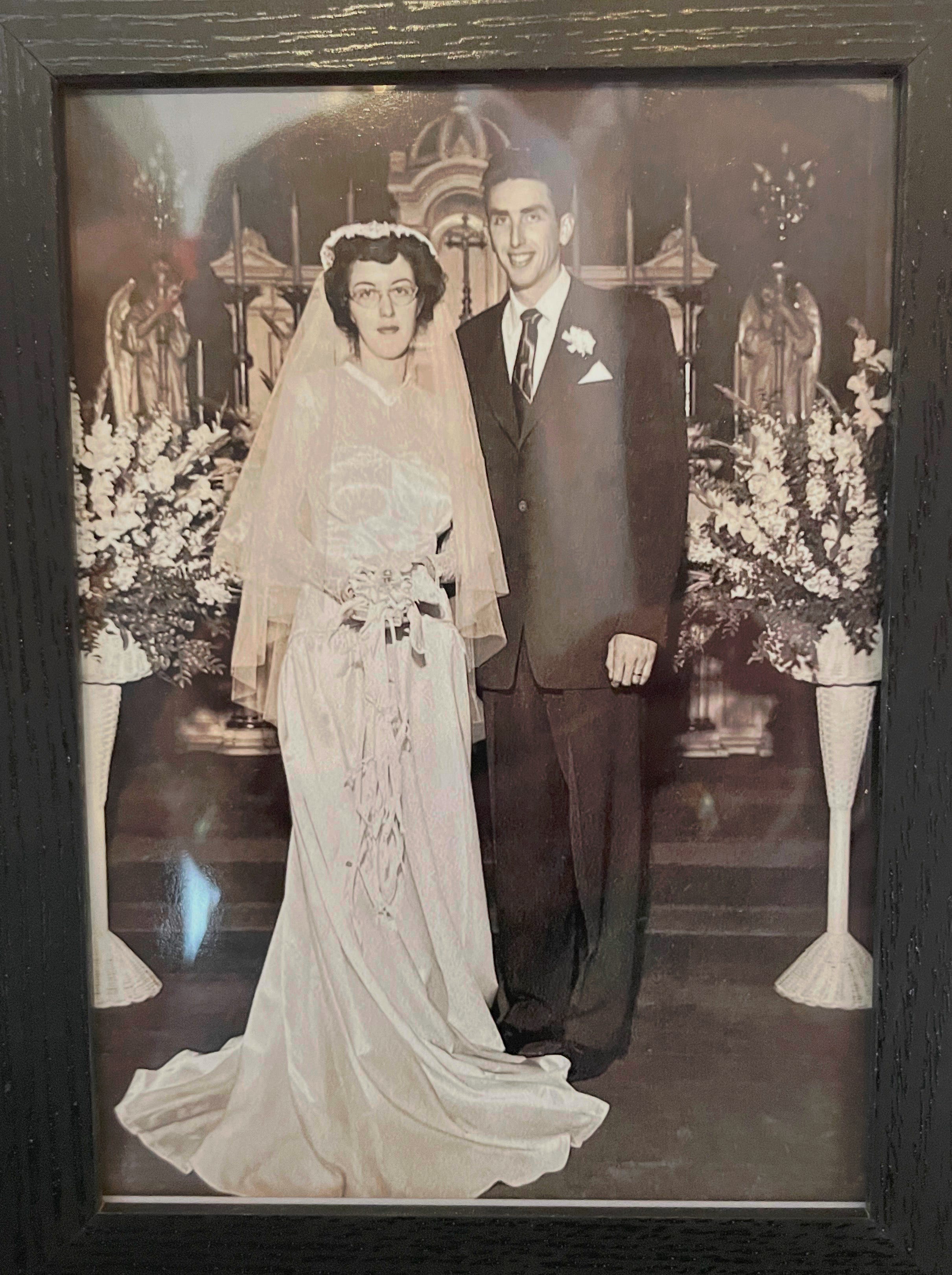
Their anniversary was Thursday, and I missed it, which is how this started. I went digging through my phone for pictures of the wedding, three years back now, and the first thing that came up wasn’t the ceremony at all. It was a picture I’d taken of a picture.
My mother, in a veil and wire glasses, standing next to my father in a dark suit at the front of a church, candles behind them and white flowers in tall stands on either side. Somebody had brought that portrait to the wedding and set it out on a table where people would walk past it. I stopped and photographed it with my phone because I don’t own a copy myself. I still don’t.
A wedding I got to write.
Elsa is my niece. She and Brian asked me to marry them, which I had never done, and I said yes before I’d finished hearing the question. Then I sat down and realized I didn’t actually know them. Not as adults. I knew a kid I’d seen at intervals and a young man I’d met a handful of times, and I had a wedding to write.
So I went after it. Phone calls, questions, the kind of research you do when you’re afraid of standing up in front of a hundred people with nothing true to say. It took weeks. It worked.
Brian served in the honor guard at Arlington. That’s a young man in dress blues standing at attention beside the worst day of a stranger’s life, folding a flag into a triangle for a widow he has never met. Elsa is trained as an expert in American Sign Language, so her whole skill is making sure a person gets understood when the ordinary channel doesn’t reach them. They have both built a life around showing up for people who need something.
I stood between them on July 23, 2023, at an old brick house in Virginia that had been there since the Civil War, in a gray suit with a black folder, and gave the talk. Elsa’s veil ran all the way down to the brick. Brian wore a blue suit that struck me as exactly the right amount of confident
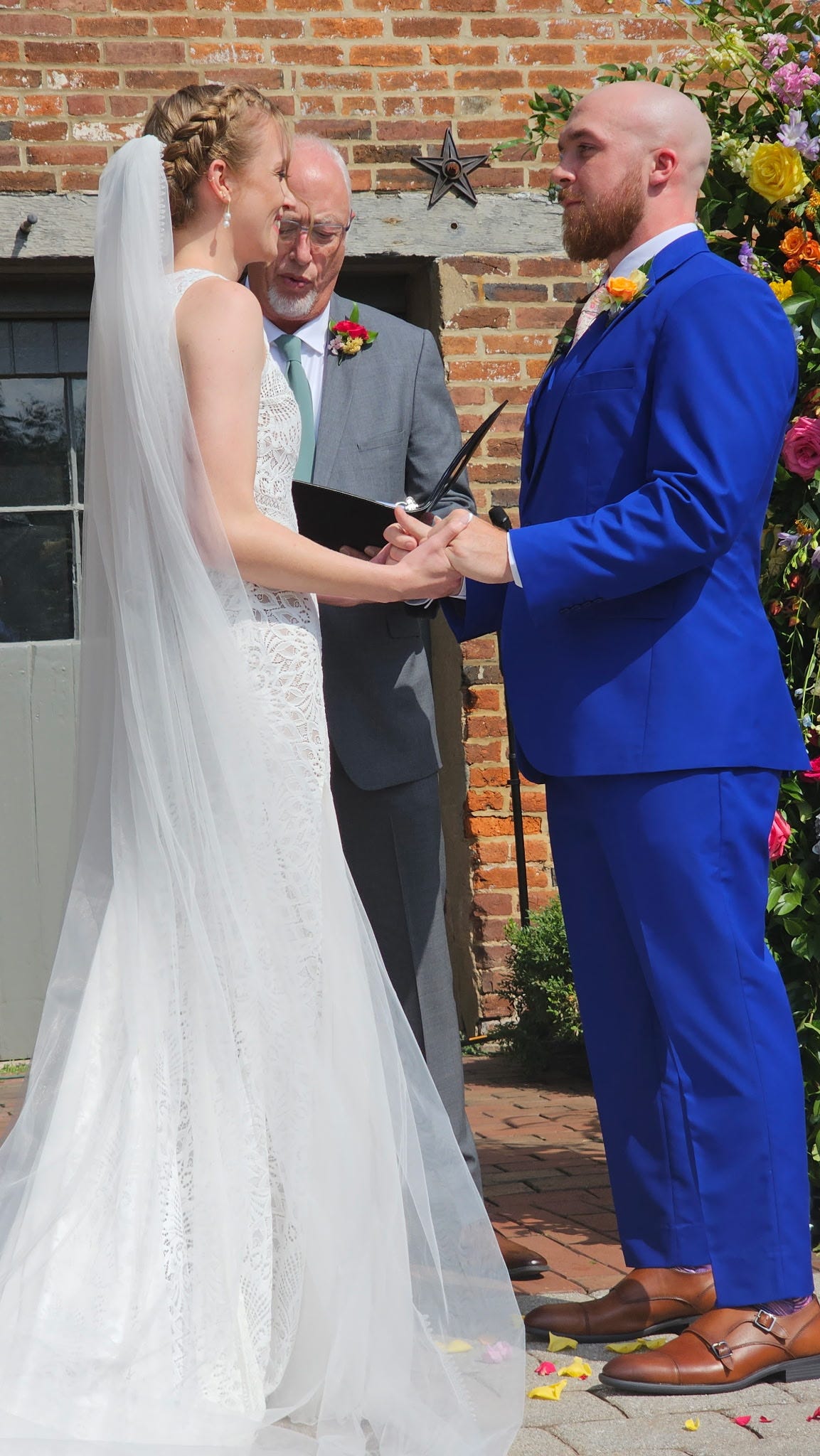
It took me until this week to notice what was happening in that photograph. A man whose training is standing in a formal role at somebody else’s threshold. A woman whose training is closing the gap when communication fails. And me in the middle, doing both jobs at once, for the only time in my life.
Officiating puts you eighteen inches from two people at the exact moment they become each other’s family, close enough to hear them breathing, and the whole job is to say the words and then get out of the frame.
I got out of the frame. Came home, and went straight back to seeing Elsa at twelve years old, all elbows and momentum, running around somebody’s yard.
The arithmetic
People assume there has to be a rupture behind a gap like that. There was a fight, if you want one. My brother and I went at each other constantly as kids, and I moved out at seventeen. We patched it up years ago, and we’ve been fine since, so the fight isn’t the answer.
The answer is arithmetic. He’s 71, and I’m 73, two years apart, and he married late and had Elsa when he was nearly forty. By the time she was that kid on the lawn, my own daughter was grown. Opposite coasts, different decades of the same life. Nobody chose it. Our calendars never once overlapped, and then it was thirty years later.
Dinner on the way south
In June, Amy texted. Elsa’s mother, two full weeks ahead, asking whether Kymberlee and I would be around, because she and Elsa were driving down to see Elsa’s grandmother and wanted to stop for dinner.
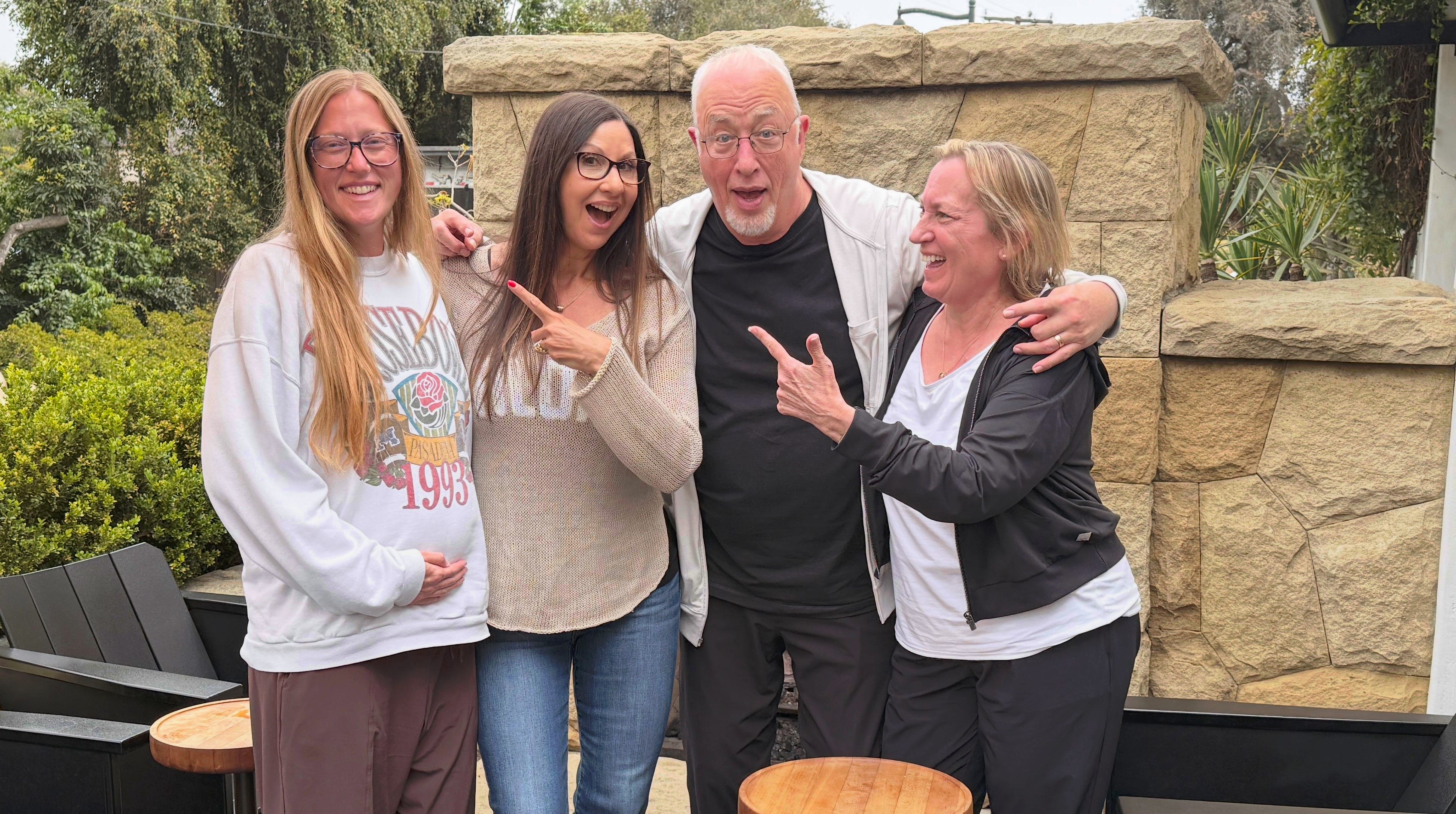
We ate outside. June gloom, that gray lid Santa Barbara puts on the start of summer, everybody in sweatshirts by six. Elsa wore an oversized tour shirt from 1993, the year before she was born, with soft pants and sneakers, dressed for comfort rather than company. She’s pregnant. Her first, my brother’s first grandchild, due any day now, possibly the day this goes out.
What I remember from that dinner isn’t the baby. Elsa and Amy ordered in tandem and then ate off each other’s plates without ever discussing it. One would reach across with a fork, and the other wouldn’t look up, because there was nothing to look up about. They have obviously been doing it for years.
I watched from across the table and felt something rise in my chest that I’d have to call intense happiness, which is a strange amount of feeling to have about two women sharing a meal.
It took me a while to work out why the volume was so high. I was a latchkey kid, and I’ve written before about seeing my father twice a year, so I’ll leave that part where it is. What I haven’t said is what a twice-a-year childhood does to everything around it. Nobody drove anybody anywhere to sit at a table together. When I met Kymberlee, part of what pulled me toward her family was that they did it constantly, on a Tuesday, for no particular reason. Nobody over there thought a shared meal was an occasion. I did. I still do.
Elsa and my daughter Melissa are close. They talk most days. I know that because Melissa told me.
My mother’s face
What I love in Elsa is the way she looks at things. Bright and sparkly, lit up before she’s even decided whether the news is good. It’s very Sylvester. It’s also my mother’s.
My mother died in 2012. Elsa was seventeen. There were seventeen years when both of them were alive inside the same family, and I could not tell you whether they ever sat in a room together. That’s the sentence that stopped me cold this week. The answer is one phone call away. Amy would pick up, she’d know instantly, and she’d be glad I asked. I’ve had her number the whole time. So this isn’t distance doing something to me. This is a thing I have not done.
Which also means the resemblance may not be mine to hand over. It could be the ordinary observation on their side, said at every Thanksgiving I wasn’t at, so worn in that Elsa has heard it since she was a girl. Or nobody has ever said it. I can’t tell you which, and that’s the part I keep turning over. Missing the years costs you the years, and everybody knows that going in. What nobody warns you about is losing the ability to tell whether the thing you noticed is rare or completely ordinary.
The folder
Here’s what I can’t get around. I have already closed this gap once. I did it in a matter of weeks, well enough to stand up in Virginia and say true things about two people in front of everyone who loved them. I know how to do this. I’ve proved I know how.
I only did it because somebody handed me a folder.
That’s the mechanism. Please give me a role, and I’ll cross any distance you name. Please send me an occasion with a date attached, and I’ll handle it thoroughly. Without one I’ll stand at the edge for thirty years and call the whole thing circumstance.
Both words
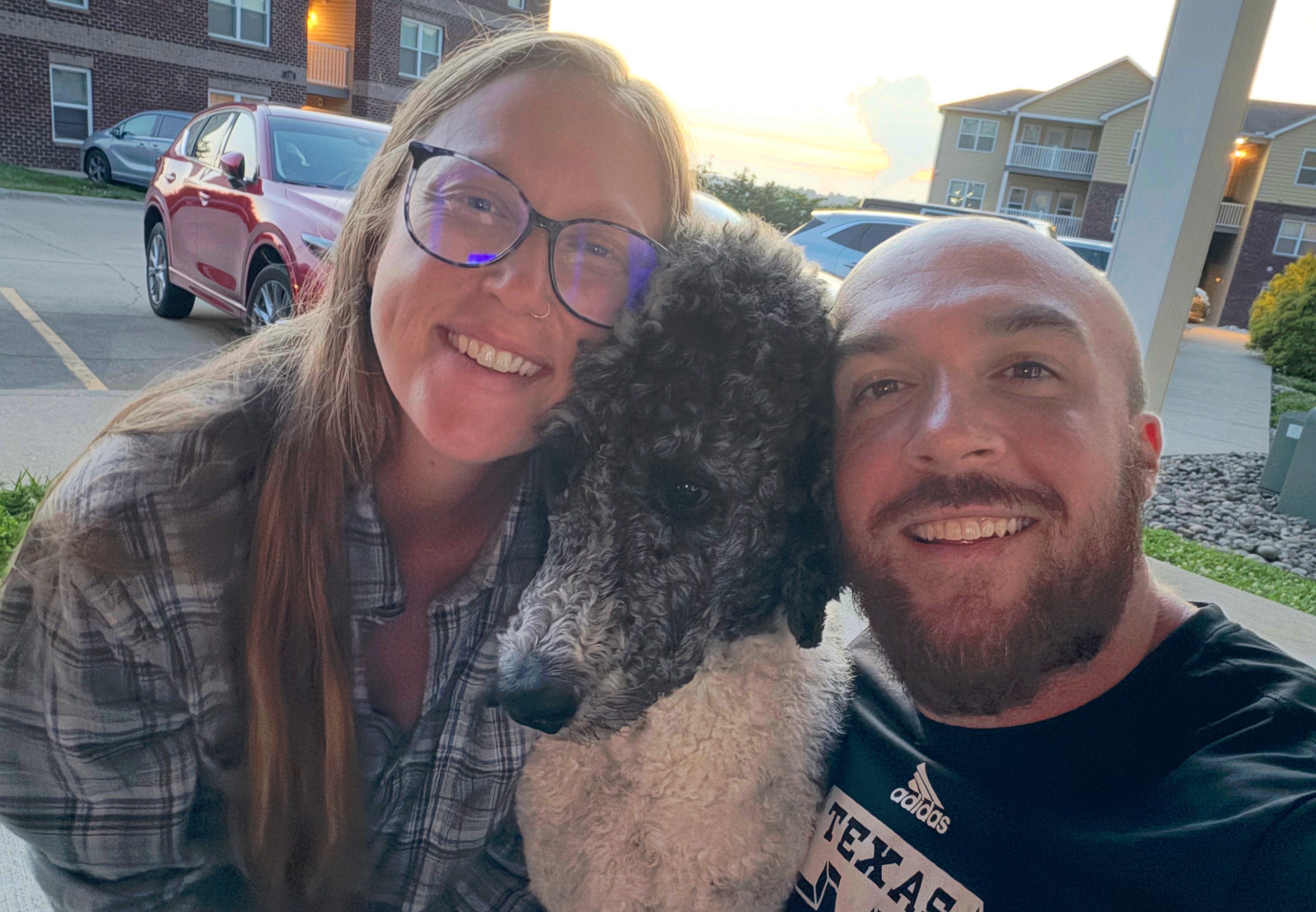
She’s due any day. Somebody is going to hand me a title again, and I’ll take it, the way I always do.
She’s been handing me one since she could talk. She calls me Uncle Mark. She has always used both words, and I notice it every single time, which probably means some part of me has been treating the title as a loan.
Amy texted two weeks ahead. Melissa and Elsa talk most days. Elsa says, Uncle Mark. I’ve spent thirty years grading the Sylvesters as a family that doesn’t do this, while they did it in my direction the whole time, with no occasion attached and nobody assigning it.
The next time she says it, I’m going to answer.
Listen to Both Words on Suno: https://suno.com/s/SS1m6iRyoi9WLWhP


